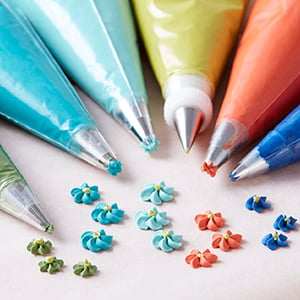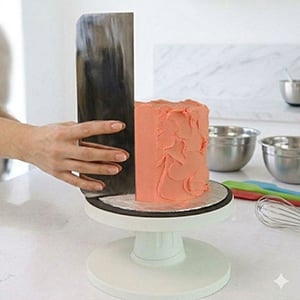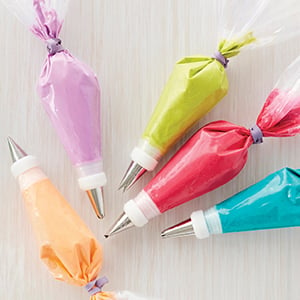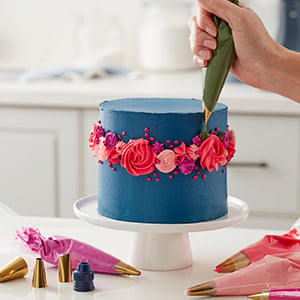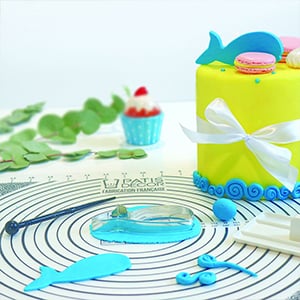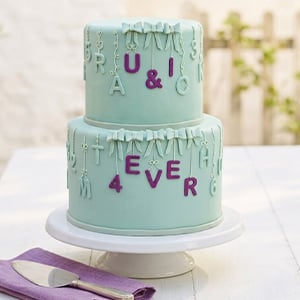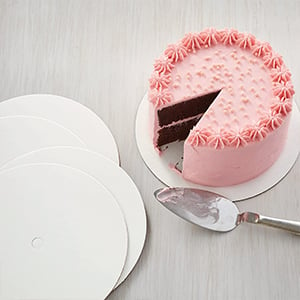

The essential cake decorating tools include an offset spatula for spreading frosting, a bench scraper for smoothing the sides, a piping bag with decorating tips for borders and designs, a turntable for easy decorating, and a cake stand or board for presentation. Additional tools, such as palette knives, fondant smoothers, and decorating combs, can help create more advanced finishes.
Cake Decoration Tools
120 productsAbout Cake Decoration Tools
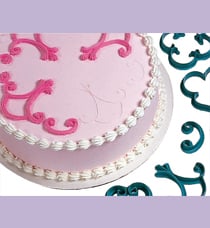
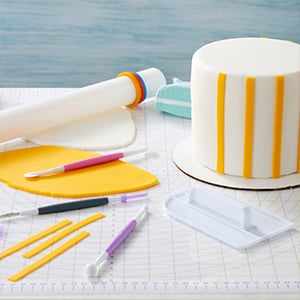
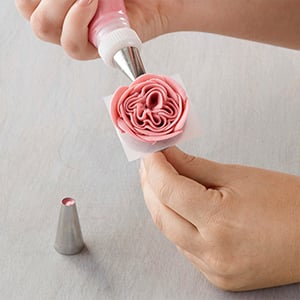
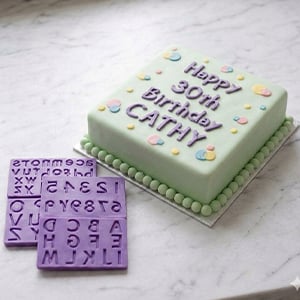
Cake decoration tools are used after baking, when structure, texture, and detail come together on the surface of a cake or pastry. This category includes piping tips, bags, turntables, molds, cutters, stencils, fondant tools, and shaping accessories that help you apply icing, sugar paste, and decorative elements with control. Each tool is designed to guide how creams, gels, and fondant move, allowing you to add borders, textures, patterns, and three-dimensional details without crushing or dragging the surface underneath. Piping tips control flow and thickness, cutters define clean edges in fondant or gum paste, and turntables allow cakes to rotate smoothly while decorating. Mats, boards, and rollers help create flat, even layers that are easier to stack and finish. These tools are not about decoration alone but about precision and stability, especially when working with soft fillings, layered sponges, or delicate sugar work. By using tools made for specific decorating tasks, it becomes easier to apply details cleanly and keep cakes looking balanced and well-finished from every angle.
Frequently Asked Questions
5 Questions
The best icing depends on the decorating technique. Buttercream is ideal for frosting cakes, piping borders, and creating textured finishes. Royal icing is commonly used for decorating cookies and intricate piping because it dries hard. Fondant creates a smooth, polished finish for covering cakes and making decorations, while glaze icing is best for drizzling over cakes, pastries, and donuts.
Start by applying a thin crumb coat to seal in loose crumbs, then chill the cake before adding the final layer of frosting. Use a turntable and a bench scraper or offset spatula to create smooth, even sides. Keeping the decoration simple, with clean edges and a few well-placed garnishes, often creates the most polished appearance.
Apply a crumb coat first and chill the cake until the frosting is firm. Then add the final layer of frosting and smooth it with an offset spatula or bench scraper while slowly rotating the cake on a turntable. Wiping your tools clean between passes helps create a neat, even finish.
Store decorated cakes in a cake carrier or covered cake stand to protect them from dust and drying out. Cakes frosted with buttercream can usually be kept at cool room temperature for a short time or refrigerated if the filling or frosting requires it. Cakes with fresh cream, cream cheese frosting, or perishable fillings should always be refrigerated. Before serving, allow refrigerated cakes to come to room temperature for the best flavor and texture.