
The most essential kitchen tools include a chef's knife, a cutting board, a measuring cup and spoon set, a mixing bowl, and basic cooking utensils such as a spatula, wooden spoon, and tongs. These tools cover most everyday cooking, baking, and food preparation tasks.
Essential Kitchen Utensils
137 productsAbout Essential Kitchen Utensils
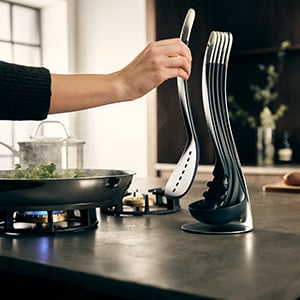
Essential kitchen utensils are the handheld tools you rely on at every stage of cooking, from the first stir to the final serve. They help you move, mix, lift, and portion food with confidence, turning everyday tasks into smoother, more controlled actions. This category brings together the core pieces that support daily cooking without complication. Utensil sets often form the backbone of a functional kitchen. A typical set includes spoons, ladles, spatulas, and turners that cover a wide range of tasks, allowing you to move comfortably between recipes without stopping to search for the right tool. When these pieces feel balanced in the hand, they make repetitive motions feel easier and more natural.
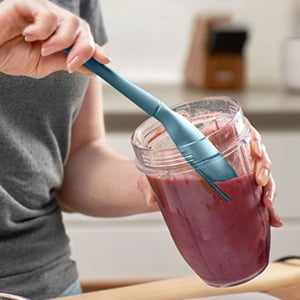
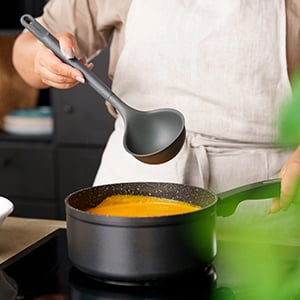
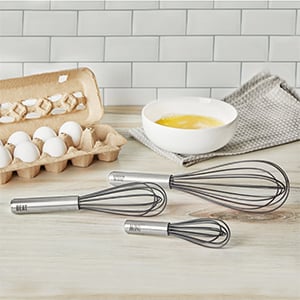
Spatulas and turners help you lift and flip food cleanly on hot surfaces. Flat edges slide easily under pancakes, cutlets, and sautéed vegetables, while sturdy handles give you leverage without bending or twisting. Spoons and ladles support stirring, scooping, and serving, with longer handles that keep hands safely away from heat when working with liquids or simmering dishes. Whisks and brushes support mixing and finishing. A whisk helps combine ingredients smoothly or introduce air into batters and sauces, while a brush lets you apply oil, glaze, or egg wash evenly across pastries and roasted foods. These tools are used constantly, often without thinking, and when they suit the task, cooking feels calmer and more consistent from one meal to the next.
Frequently Asked Questions
5 Questions
Silicone kitchen utensils are heat resistant, gentle on non-stick cookware, and resistant to stains and odors. They are also flexible, making it easier to scrape bowls and pans, and many are dishwasher safe for convenient cleaning.
Store frequently used utensils in a countertop utensil holder for easy access, or organize them in kitchen drawers using dividers. Keep utensils clean and completely dry before storing, and separate sharp tools from everyday utensils for safety.
Silicone, wood, and nylon utensils are the safest choices for non-stick cookware because they are less likely to scratch or damage the coating. Avoid using metal utensils unless the cookware manufacturer specifically states they are safe for the surface.
Replace kitchen utensils when they become cracked, warped, heavily stained, or damaged. Silicone utensils should be replaced if they tear, wooden utensils if they develop deep cracks or absorb odors, and plastic utensils if they become worn or melted. Well-maintained stainless steel utensils can often last for many years.