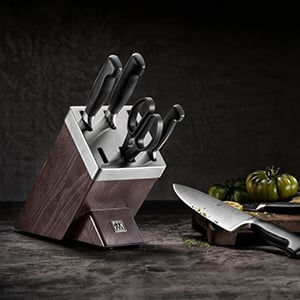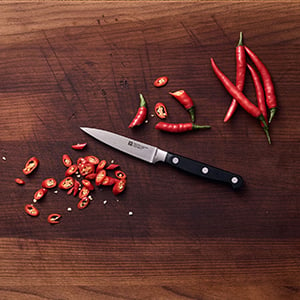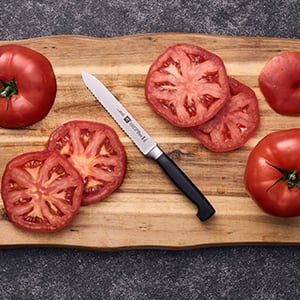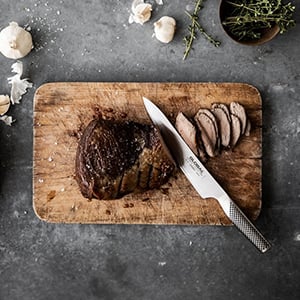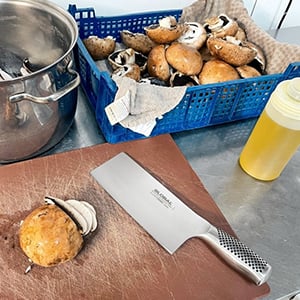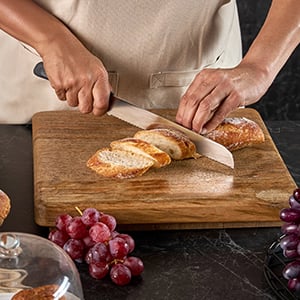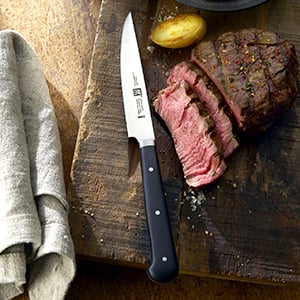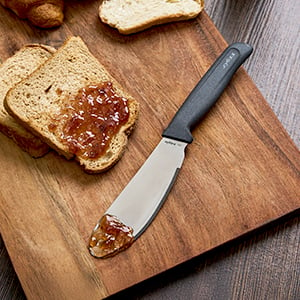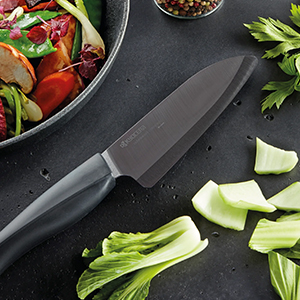

A well-equipped kitchen typically includes a chef's knife for everyday cutting, a paring knife for small and detailed tasks, a bread knife for slicing crusty loaves, and a utility knife for medium-sized ingredients. These knives can handle most food preparation needs.
Knives
251 productsAbout Knives
Knives are essential tools that support nearly every step of food preparation, from trimming and slicing to chopping and portioning. The right knife improves control, accuracy, and comfort, helping ingredients cook evenly and look cleanly prepared. This category includes a range of knives designed for specific tasks. Chef’s knives handle general chopping, slicing, and mincing. Paring and peeling knives support small, precise work like trimming fruit or removing blemishes. Utility knives bridge the gap between small and large blades for everyday tasks, while slicing and carving knives are shaped to produce clean, even cuts through cooked meats and roasts. Bread knives use serrated edges to slice through crusty loaves without compressing the interior.
Specialty knives address more focused needs, such as filleting fish, cutting around bones, or preparing delicate ingredients. Knife sets offer a coordinated selection of blades, making it easier to handle a variety of prep tasks without switching tools constantly. Blade materials, balance, and handle shape all affect how a knife feels in hand. Well-balanced knives reduce fatigue during longer prep sessions and allow for smoother, more controlled cuts. Proper storage and regular sharpening help maintain performance and extend the life of each blade. A dependable knife collection makes everyday prep more efficient and predictable, helping cooks move confidently from raw ingredients to ready-to-cook components.
Frequently Asked Questions
5 Questions
A stamped knife is cut from a single sheet of steel, making it generally lighter and more affordable. A forged knife is formed from a thicker piece of steel, resulting in greater strength, balance, and durability.
A sharp knife should cut cleanly through foods without requiring excessive force. If it crushes tomatoes, slips on ingredients, or struggles to slice paper, it likely needs honing or sharpening.
Wash knives by hand with warm water and mild dish soap, then dry them immediately to help prevent corrosion and protect the blade. Avoid leaving knives soaking in water and follow the manufacturer's care instructions.
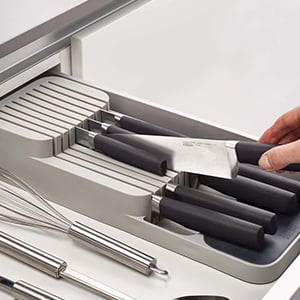
Store knives in a knife block, on a magnetic knife rack, or in protective blade guards to help protect the blade and reduce the risk of injury. Avoid storing loose knives in a drawer, where they can become damaged or cause accidents.